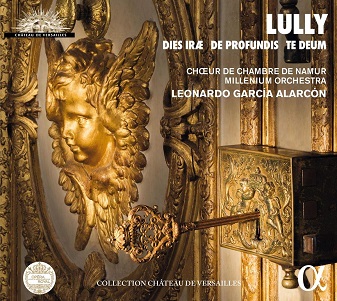
Lully: Dies Irae/De Profundis/Te Deum
Choeur De Chambre De Namur & Millenium Orchestra & Leonardo Garcia Alarcon
Genre: Classical
CD | 1 disc(s) | Release: 02-08-2019
Verwachte levertijd (in NL): +/- 7 tot 15 werkdagen
Bestel- en levertijd
De getoonde levertijden (met uitzondering van In Stock-items) zijn enkel en alleen een gemiddelde op basis van de eerdere prestaties van achterliggende groothandels, distributeurs, labels en fabrieken.
Indien er geen voorraad is bij de Nederlandse distributeur/label/fabriek, dan kan het soms enkele weken duren! Dit betreft dan vaak een landelijke situatie.
BELANGRIJK: Om u een zo'n aantrekkelijk mogelijk verzendtarief/bezorgtarief te kunnen bieden, proberen wij orders van meerdere artikelen zoveel mogelijk gebundeld te versturen. Een deellevering is zeker mogelijk, maar over het algemeen is de algehele levertijd gelijk aan de levertijd van het artikel met de langste bestel- en levertijd! Neem dus gerust eerst contact met ons op indien u een deadline heeft. Wij kijken dan meteen of dit haalbaar is!*
ACTIE: 3% korting bij elke bestelling van min. 3 artikelen

Extra info
| Extra info: | Millenium Orch./Garcia Alarcon/Choeur De Chambre Namur |
|---|---|
| Dirigent: | LEONARDO GARCIA ALARCON |
| Maatschappij: | Outhere |
| Label: | Alpha |
| Barcode: | 3760014194443 |
| Suffix - prefix: | 444 ALPHA |
| Taal: | IT |
| Herkomst: | Holland |
| Genre (extra): | Choral Music |
| Solist(en): | CHOEUR DE CHAMBRE DE NAMUR |
| Orkest: | MILLENIUM ORCHESTRA |
Beschrijving
Sophie Junker, Judith van Wanroij, Matthias Vidal, Cyril Auvity, Thibaut Lenaerts, Alain Buet & Choeur de Chambre de Namur, Millenium Orchestra, Leonardo Garcia Alarcon
‘Although Lully never held any post in the Chapelle du Roi, his influence on the development of the grand motet, so emblematic of the Grand Siècle, was of decisive importance. He wrote imposing motets celebrating the glory of God and the King for the great ceremonies at court. Of the many royal funerals, that of Queen Marie-Thérèse in 1683 was among the most grandiose. Lully’s Dies iræ and De profundis were sung there. But his most celebrated motet was undoubtedly his Te Deum, which rang out for the first time in 1677 and became the king’s favourite. In 1687 Lully directed itonce again, but struck his foot violently with the heavy walking stick he used to beat time. The wound became infected and the gangrene gradually spread, causing the surintendant’s death on 22
March. Such was the tragic destiny of the man who was capable of conveying the most brilliant glory but also all the anguish of death in the same vein of grandeur.’*... That theatrical grandeur is the characteristic of this version recorded in the Chapelle Royale of the Château de Versailles. Lully is in the limelight again in 2019, on the occasion of the 350th anniversary of the Académie Royale de Musique (Paris Opéra), of which he was director from 1672 until his death. (*from an article by T. Leconte, CMBV)
Jean-Baptiste Lully (1632-1687):
Dies Irae
De Profundis
Te Deum
"Jean Baptiste Lully (1632-1687) was aan het hof van de Zonnekoning verantwoordelijk voor muziek in grote bezettingen. Kamermuziek componeerde hij niet, dat was het terrein van François Couperin die dan weer geen groot bezette motetten componeerde. Lully was ook de componist die een geheel eigen Franse operastijl ontwikkelde. In zijn drie hier opgenomen grands motets, voor groot koor, een kleiner koor en solisten, zit dan ook flink wat theater. Hervé Niquet toonde dat een jaar of twintig geleden al aan in zijn opname, en net als Niquet is ook Leonardo García Alarcón een volbloed theaterman. Hij zet al zijn vocale troepen in: hij is op dit moment zowel artistiek leider van zijn Cappella Mediterranea als van het Choeur de Chambre de Namur. De opstelling van de koren, groot, kleiner en solistisch, is op deze opname perfect hoorbaar gemaakt, waardoor de soms erg massieve muziek van Lully nergens een polyfone brij wordt. Bij de solisten vinden we de Nederlandse sopraan Judith van Wanroij, als altijd kraakhelder van stem en dictie. Alarcón speelt flink met tempocontrasten en laat in het Te Deum de trompetten schallen en de pauken roffelen. Een prachtige Lully-cd."
Klassieke Zaken Magazine 4-2019
"These works demand a conductor with theatrical instincts, and Leonardo García Alarcón certainly supplies that...his ability to shape expressive gestures within the music through added rests, dynamics, ornamentation, and articulation marks is both shrewdly judged and sensitive to the needs of the music itself—as in the repeatedly halting performance of the Dies irae’s “Pie Jesu.” This is, in short, a success from start to finish. Warmly recommended."
Fanfare - January/February 2020
Aanbevolen
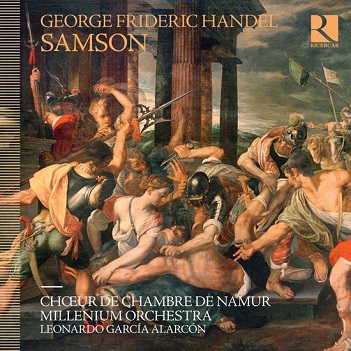
George Frideric Handel: Samson
Choeur De Chambre De Namur & Millenium Orchestra & Leonardo Garcia Alarcon
CD
Classical
€ 27,95
Details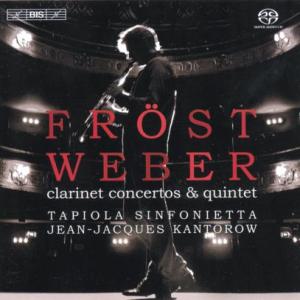
Weber: Clarinet Concertos & Quintet
Frost, Martin & Tapiola Sinfonietta & Jean-Jacques Kantorow
SACD
Classical
€ 20,95
Details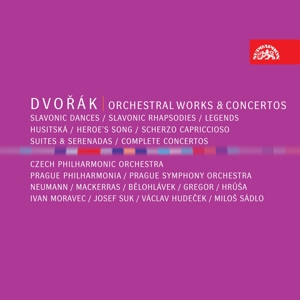
Dvorak: Orchestral Works and Concertos
Czech Philharmonic Orchestra & Prague Philharmonia & Prague Symphony Orchestra
CD
Classical
€ 57,95
Details
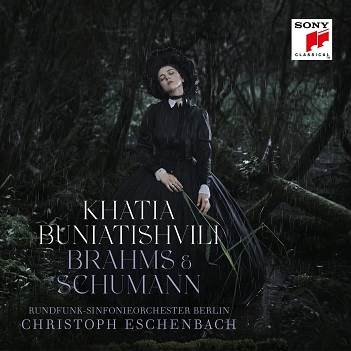
Brahms & Schumann
Khatia Buniatishvili & Rundfunk-Sinfonieorchester Berlin & Christoph Eschenbach
CD
Classical
€ 23,95
Details


Walton: Viola Concerto (Rev. 1962)/Partita For Orchestra
Ehnes, James
SACD
Classical
€ 20,95
Details
Recent bekeken
Lully: Dies Irae/De Profundis/Te Deum
Choeur De Chambre De Namur & Millenium Orchestra & Leonardo Garcia Alarcon
CD
Classical
€ 20,95
Details