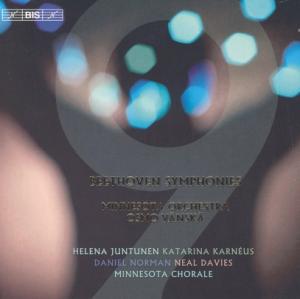
Symphony No.9
Zinman, David
Componist: OSMO VANSKA
Genre: Classical
CD | 1 disc(s) | Release: 23-10-2006
Verwachte levertijd (in NL): +/- 7 tot 15 werkdagen
Bestel- en levertijd
De getoonde levertijden (met uitzondering van In Stock-items) zijn enkel en alleen een gemiddelde op basis van de eerdere prestaties van achterliggende groothandels, distributeurs, labels en fabrieken.
Indien er geen voorraad is bij de Nederlandse distributeur/label/fabriek, dan kan het soms enkele weken duren! Dit betreft dan vaak een landelijke situatie.
BELANGRIJK: Om u een zo'n aantrekkelijk mogelijk verzendtarief/bezorgtarief te kunnen bieden, proberen wij orders van meerdere artikelen zoveel mogelijk gebundeld te versturen. Een deellevering is zeker mogelijk, maar over het algemeen is de algehele levertijd gelijk aan de levertijd van het artikel met de langste bestel- en levertijd! Neem dus gerust eerst contact met ons op indien u een deadline heeft. Wij kijken dan meteen of dit haalbaar is!*
ACTIE: 3% korting bij elke bestelling van min. 3 artikelen

Extra info
| Extra info: | Minnesota Orchestra/Osmo Vanska |
|---|---|
| Dirigent: | OSMO VANSKA |
| Maatschappij: | Outhere |
| Label: | Euroarts |
| Barcode: | 7318599916163 |
| Suffix - prefix: | 1616 BISSA |
| Taal: | XX |
| Herkomst: | Holland |
Beschrijving
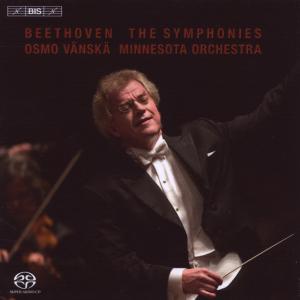
"Vänskä offers a radical re-think of Beethoven's Choral Symphony, a youthful, brave statement, free of iconic influences. Considered in purely musical terms, his version would better fit the idea of revolution through renewal.
The opening of Vänskä's Choral, though deathly quiet, is chiselled and precise, the first tutti like a fireball from the heavens, much aided by a hugely dynamic recording. Within a mere minute or two, one quality has made its mark with maximum force, namely rhythm, tight as a drum – that, and an astonishing power of projection.
But what is really striking is the muscularity of the playing, its clipped, propulsive phrasing, quite unlike any other modern-instrument version of the Ninth. Suddenly this quirky first movement sounds like tough-grained middleperiod Beethoven, the fugal writing at its centre granitic and purposeful, the music's many calculated repetitions unnervingly obsessive. The contrast with the Bacchanalian Scherzo is more marked than usual, Vänskä again focusing the music's rhythmic profile with unwavering control. The Adagio's quiet opening is breathtaking and although the variations that follow are seamlessly interwoven, the effect is anything but rigid.
Vänskä's finale returns us to the shock and awe of his first moment, with a decisive, tight-lipped opening (the fast tempo held absolutely firm), warmly phrased counterpoint surrounding the 'Ode to Joy' build-up and then, with the unleashing of the voices, an excellent group of soloists and a well drilled chorus who sing as if they really know (and mean) what they're singing.
The tenor's March episode is fairly swift, leading to a razor-sharp fugue. And when the chorus enters, well… In a word, Vänska's finale is full of zeal."
Gramophone Classical Music Guide - 2010