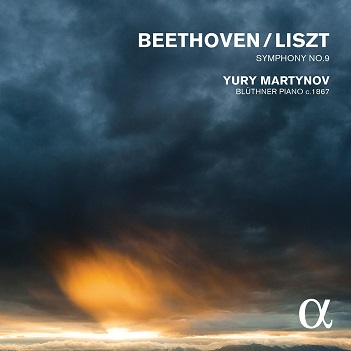
Beethoven: Symphony No. 9
Martynov, Yury
Genre: Classical
CD | 1 disc(s) | Release: 02-01-2016
Verwachte levertijd (in NL): +/- 7 tot 15 werkdagen
Bestel- en levertijd
De getoonde levertijden (met uitzondering van In Stock-items) zijn enkel en alleen een gemiddelde op basis van de eerdere prestaties van achterliggende groothandels, distributeurs, labels en fabrieken.
Indien er geen voorraad is bij de Nederlandse distributeur/label/fabriek, dan kan het soms enkele weken duren! Dit betreft dan vaak een landelijke situatie.
BELANGRIJK: Om u een zo'n aantrekkelijk mogelijk verzendtarief/bezorgtarief te kunnen bieden, proberen wij orders van meerdere artikelen zoveel mogelijk gebundeld te versturen. Een deellevering is zeker mogelijk, maar over het algemeen is de algehele levertijd gelijk aan de levertijd van het artikel met de langste bestel- en levertijd! Neem dus gerust eerst contact met ons op indien u een deadline heeft. Wij kijken dan meteen of dit haalbaar is!*
ACTIE: 3% korting bij elke bestelling van min. 3 artikelen

Extra info
| Extra info: | Yury Martynov |
|---|---|
| Maatschappij: | Outhere |
| Label: | Alpha |
| Barcode: | 3760014192272 |
| Suffix - prefix: | 227 ALPHA |
| Taal: | EN |
| Herkomst: | Holland |
| Genre (extra): | Piano |
| Solist(en): | YURY MARTYNOV |
Beschrijving
Yury Martynov (piano)
After four previous discs devoted to Franz Liszt’s transcriptions of the Beethoven symphonies, the pianist Yury Martynov completes the cycle with the transcription of the Ninth Symphony. The reduction of this complex work for a single piano and two hands – he had already adapted it for two pianos – constituted a genuine challenge for Liszt, who was obliged to omit certain inner parts. Yet he succeeded in reproducing the symphony’s prodigious character and revealing its incredible power. The piano combines the orchestra,
the soloists and the chorus, unifying these disparate voices in a single instrument. The work’s energy and its textures are displayed to the full in Yury Martynov’s performance on a Blüthner piano dating from 1867 and belonging to the Edwin Beunk collection.
Beethoven:
Symphony No. 9 in D minor, Op. 125 'Choral' (transcription for piano)
"Franz Liszt was een groot bewonderaar van Beethoven. Vooral diens symfonieën hadden zijn aandacht. ‘Ze kunnen niet genoeg bestudeerd en beschouwd worden door iedereen die een serieuze drang heeft naar kennis of die zelf wenst te creëren.’ Liszt voegde de daad bij het woord en bewerkte in de loop van zijn leven alle symfonieën voor piano solo. Vooral zijn transcriptie van de Negende symfonie, in het bijzonder de finale, was een staaltje muzikale verbeeldings- en vertalingskracht. De Russische pianist Yury Martynov durfde het als een van de weinige pianisten aan deze en ook de andere transcripties op zijn repertoire te zetten. Hij besloot alle symfonieën in de pianobewerking op te nemen. Dat bracht hem veel lof en nu zet hij met de registratie van Beethovens Negende symfonie de kroon op zijn werk. Hij beschikt weer over de prachtige Blüthner-vleugel uit 1867 uit de collectie van Edwin Beunk en hij speelt wederom fabelachtig. Wat hij boven alles duidelijk maakt is niet alleen het genie van Liszt, maar vooral het feit dat Beethoven ook in zijn symfonieën eigenlijk heel pianistisch dacht. Zelfs die krankzinnige finale zou, ontdaan van koor, orkest en solisten, zo een sluitstuk van een grootse pianosonate kunnen zijn. Indrukwekkend.
Klassiekezaken Magazine 2-2016
"Listening to No. 9 on the piano is a curious experience, but if the variety of tone-colour of the orchestral (and vocal) original is inevitably diminished, the music's harmonic boldness and astringency are thrown all the more vividly into relief…especially in the hands of a virtuoso like Yury Martynov. His performance is altogether a tour de force"
BBC Music Magazine - April 2016 *****
"From the beginning, with Martynov's skilful evocation of the lightning-bolt open fifths piercing the ominous clouds that cloak the Ninth's first moments, the overwhelming impression is not of reduction but of an enlargement, an opening out, a sudden clarification of this familiar music…the metamorphosis from the storm unleashed at the opening of the finale to the imploring earnestness of the 'Ode to Joy' is stunningly affecting. "
Gramophone Magazine - April 2016
Aanbevolen
Weber: Clarinet Concertos & Quintet
Frost, Martin & Tapiola Sinfonietta & Jean-Jacques Kantorow
SACD
Classical
€ 20,95
Details
Dvorak: Orchestral Works and Concertos
Czech Philharmonic Orchestra & Prague Philharmonia & Prague Symphony Orchestra
CD
Classical
€ 57,95
Details
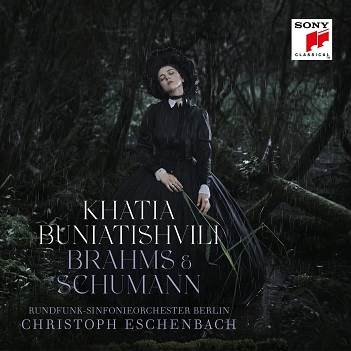
Brahms & Schumann
Khatia Buniatishvili & Rundfunk-Sinfonieorchester Berlin & Christoph Eschenbach
CD
Classical
€ 23,95
Details


Walton: Viola Concerto (Rev. 1962)/Partita For Orchestra
Ehnes, James
SACD
Classical
€ 20,95
Details